
1. What Is All-on-X? (And Why It’s Different)
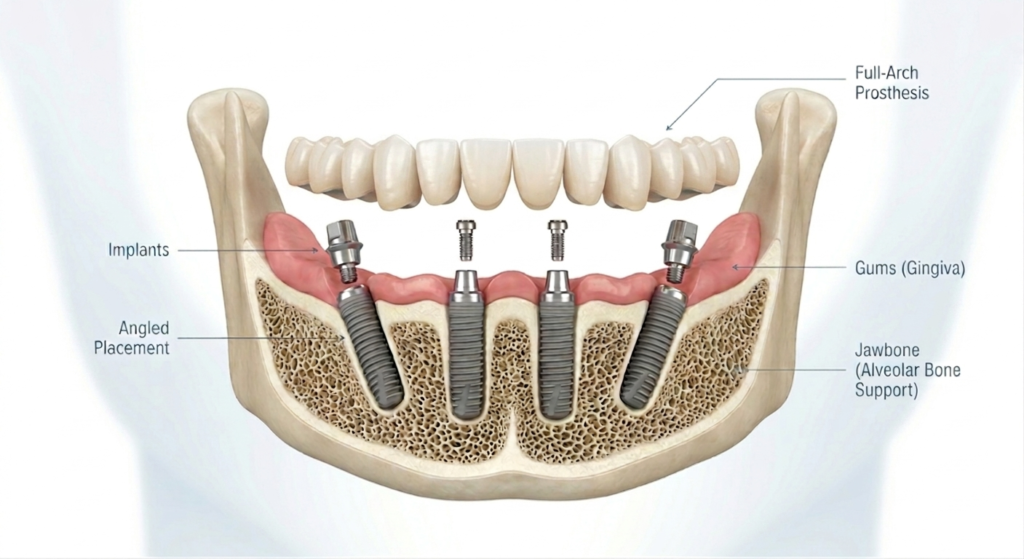
All-on-X is an advanced dental implant solution that replaces a full arch of missing teeth using a limited number of implants, depending upon the case and situation.
Instead of placing an implant for every tooth, strategically positioned implants support a fixed, full-arch implant-supported denture, giving you a stable, natural-looking smile.
2. How Does All-on-X Work?
The procedure involves placing implants into strategic areas with the strongest bone support, often at precise angles to maximize stability.
A custom-designed set of teeth is then attached, creating a secure, non-removable solution that functions like natural teeth.
3. Benefits of All-on-X Treatment
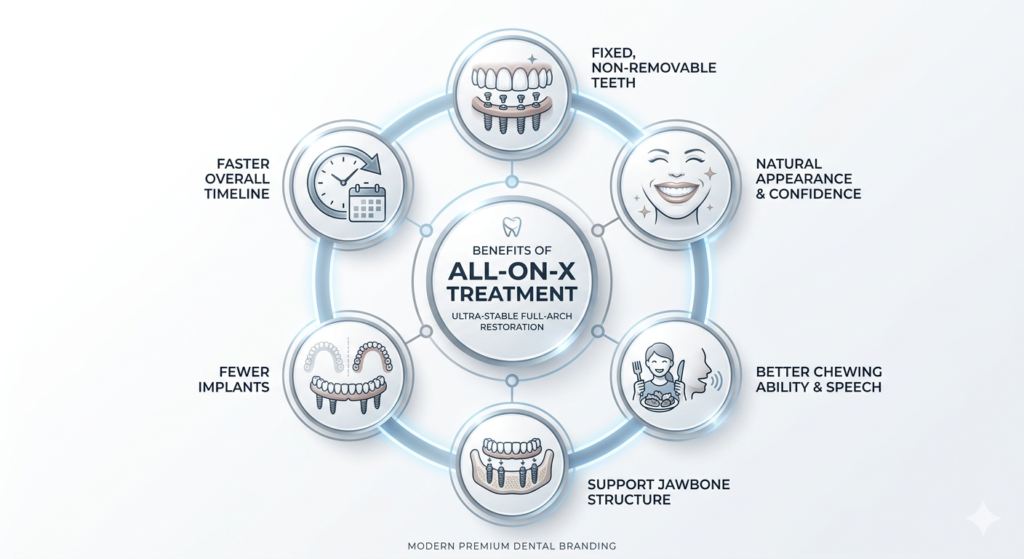
- Fixed, non-removable teeth
- Natural appearance and improved confidence
- Better chewing ability and speech
- Helps maintain jawbone structure
- Fewer implants compared to traditional methods
- Faster overall treatment timeline in many cases
4. Who Is a Good Candidate?
You may be a good candidate if you:
- Have multiple missing or failing teeth
- Wear dentures and want a fixed solution
- Have sufficient jawbone (or are open to evaluation for bone support options)
- Are in generally good health
A detailed consultation is always required to determine suitability.
5. What to expect: Before your surgery
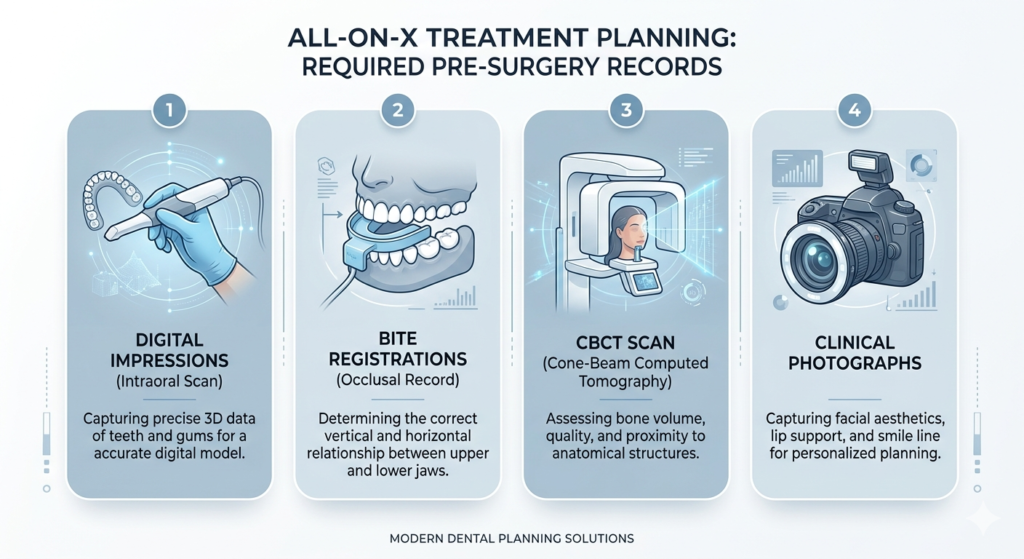
You will complete your examination and records. To achieve highly accurate, personalized surgery, detailed dental records are captured to plan the placement of implants, teeth, and the smile.
- Digital impressions
- Bite registrations
- CBCT scan
- Photographs
Supplements:
It is recommended that throughout the process, you incorporate vitamin D, vitamin K, and calcium supplements into your daily routine indefinitely. This is crucial for preparing your body for the healing process and supporting your bone and jaw health. Please consult your physician if you have any concerns.
Prescriptions:
Please inform your dentist of any allergies.
In most of the cases, you will be prescribed an antibiotic, a steroid, and an antiseptic oral rinse.
These will help keep you more comfortable post-surgery and aid in reducing inflammation and infection.
6. What to expect: On the Day of your surgery
When you arrive, our treatment coordinator will welcome you and will address any last-minute questions you have. If chosen, your doctor will then give you the oral sedation.
Do arrange for transportation to and from surgery. When it’s time for your driver to pick you up, our staff will let them know. Typically, you will be out of surgery within 4-6 hours.
Here are some tips:
- Prepare for the procedure – knowing what to expect will reduce anxiety.
- Talk to your dentist – the dentist and treatment coordinator will be your best person to ask any questions regarding the procedure.
- Practice relaxation techniques – deep breathing, meditation, and visualization may help calm your mind and reduce anxiety.
7. What to expect: After your surgery
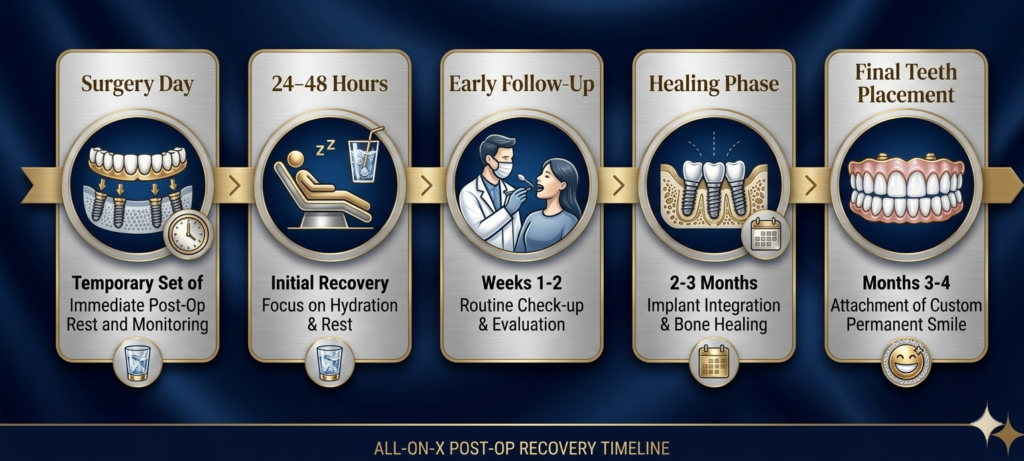
After getting home from surgery, it is important to rest and recover for the next 24-48 hours before seeing the doctor.
- Rest
- It could take up to 10 hours for the sedative’s effect to wear off in your body.
- After getting home from your day-of-surgery, you may feel tired and want a nap. This is expected, and please rest and recover.
- When you are sleeping, it is crucial to keep your head raised to prevent excessive swelling.
- Hydrate
- Rehydrate your body and aid the passing of the medicine throughout your system.
- Drink water with electrolytes such as Gatorade, Smartwater, G2, etc.
- Stay away from hot liquids, as these will disrupt surgery areas.
* DO NOT OVEREXERT YOURSELF FOLLOWING YOUR SURGERY
8. Caring for your teeth
After surgery, you will receive temporary teeth while your permanent teeth are being made. It is essential to take proper care of these temporary teeth to prevent complications and ensure a smooth healing process.
Some tips to follow:
• Clean regularly. Brush your teeth gently with a soft-bristle toothbrush at least twice per day. Use mouthwash to rinse after brushing.
• Avoid hard or sticky foods. During the healing process, avoid hard and sticky foods that can damage your temporary teeth. Instead, eat soft or easy-to-eat foods.
• Don’t use excessive force. Avoid biting or chewing with excessive force on the temporary teeth.
• Attend follow-ups. Attend all appointments with your dentist to ensure that the temporary teeth are functioning correctly and that the healing process is progressing well.
• Don’t smoke. Do not smoke for several weeks, as this can affect healing and cause nerve pain.
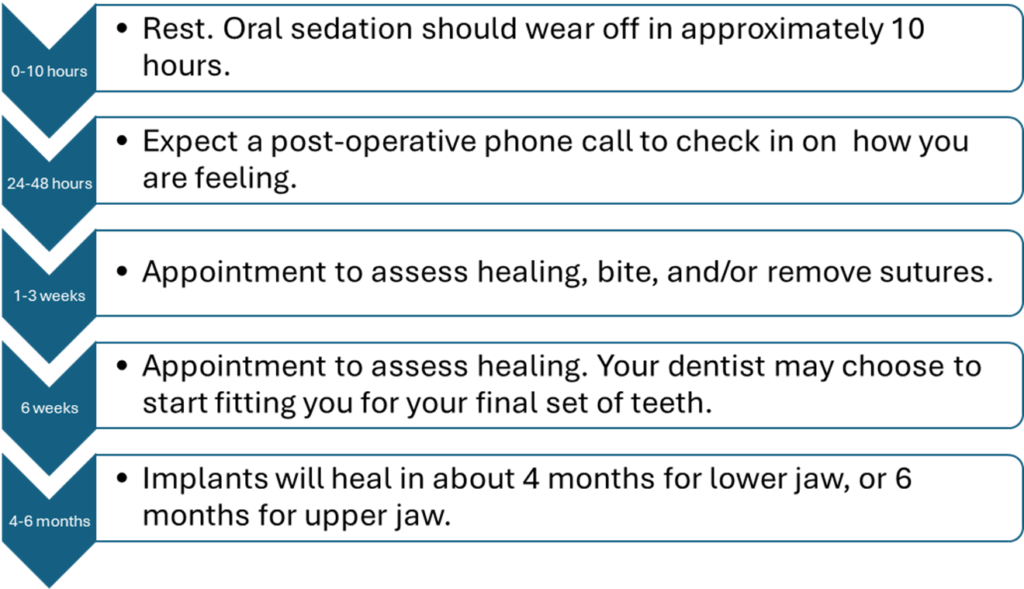
9. Post-Op Timeline
After getting home from surgery, youneed to rest, hydrate, and recover for the next 24-48 hours. Our office will continue to follow up with you to assess your healing and address any concerns you may have. Do not hesitate to contact us before your post-op appointment with any questions.
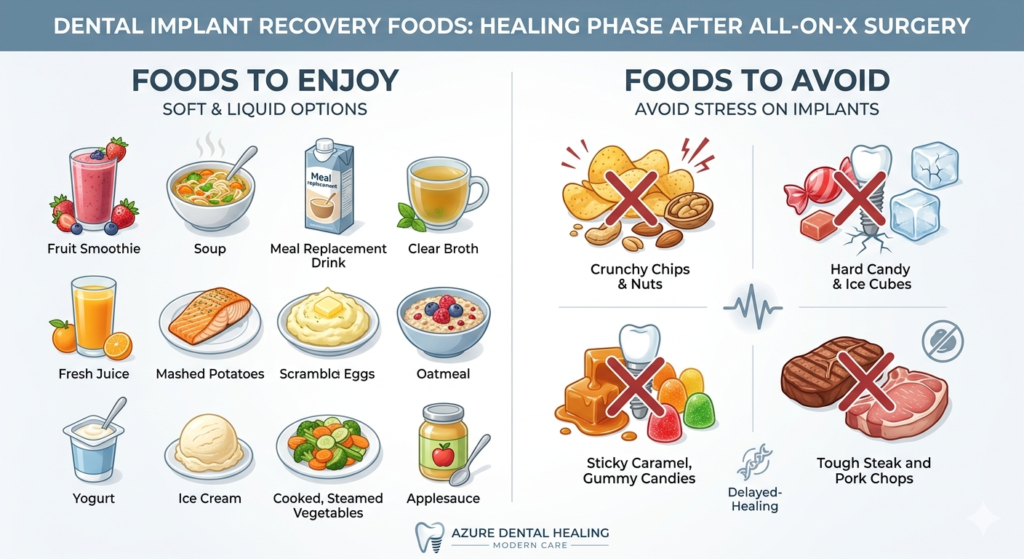
10. Food to Enjoy: Healing Phase
| Liquid Foods | Soft Foods |
| Smoothies | Fish |
| Soups | Mashed potatoes |
| Meal replacement drinks | Eggs |
| Broths | Oatmeal |
| Juice | Yogurt |
| Ice-cream | |
| Cooked vegetables & Apple Sauce |
11. Food to Avoid: Healing Phase
For 4-6 months until implants are healed, and the final teeth have been placed.
| Crunchy food | Can get stuck under your temporary teeth causing discomfort and delaying healing. |
| Hard foods | Require your jaw to apply uneven pressure to your teeth, which can delay healing. |
| Sticky foods | Can disturb and move your temporary teeth or get stuck on the healing soft tissue. |
| Tough meats | Require extra chewing and force upon your healing implants, causing stress and delaying healing. |
12. FAQs: “Is it normal…?”
“I’ve come back from implant surgery, and my cheek is gradually beginning to swell. What can I do?”
- In the first 24 hours after implant surgery, it’s important to frequently cool your cheek with a cold pack. Ideally, cool your cheek for 20 minutes, then take a 10-minute break. You might experience some swelling in the first three days, but it should gradually subside. In the event that it doesn’t, contact your dental office.
“As soon as I lie down, I feel an uncomfortable pressure and throbbing.”
- You can prevent this by using an extra pillow during the first night to rest your head in a higher position than usual.
“It’s now been a few hours since the surgery, and the wound is still bleeding.
What should I do?”
- Minor bleeding is nothing to worry about, but you should try to stop it by biting gently on a piece of sterile gauze. Please remember that rinsing your mouth vigorously or sucking, for example, when drinking through a straw, can prolong the bleeding. If the bleeding is heavy or doesn’t stop, you should definitely contact your dentist.
“I have small bruises (hematomas) on my face. Is this normal?”
- Minor bruises often don’t appear until a few days after the implant treatment and are nothing to worry about.
The colour of the bruises will change when the tissue starts healing.
“My lips feel dry and have small cracks.”
- During the first 2 days, use vaseline or a cream containing lanolin to prevent dry lips.
Also, make sure you drink enough water.
“How long does the wound take to heal?”
- The first phase is the healing of the soft tissue – this takes about a week. The second phase,known as osseointegration, is the healing of the implant in the jawbone. During the second phase, the bone grows around the implant, gradually forming a firm, stable grip.