
A Patient Guide to Saving the Tooth from Within
Not all dental problems begin on the surface. Sometimes, the true source of discomfort lies deep inside the tooth, in the area where the nerve and blood supply are located. When this inner tissue becomes inflamed (irritated and swollen) or infected, the tooth may need more than a filling — it may require endodontic care.
At PHI Dental Care, we believe patients should understand not only what treatment is being recommended, but why it matters. Endodontics is the area of dentistry that focuses on diagnosing (identifying) and treating conditions affecting the inside of the tooth, to relieve pain, remove infection, and preserve the natural tooth whenever possible.
This guide is designed to help patients understand what endodontics involves, when treatment may be needed, and why timely care can make an important difference.
What Endodontics Actually Means
Endodontics is the branch of dentistry concerned with the inner structures of the tooth, especially the dental pulp and root canals.
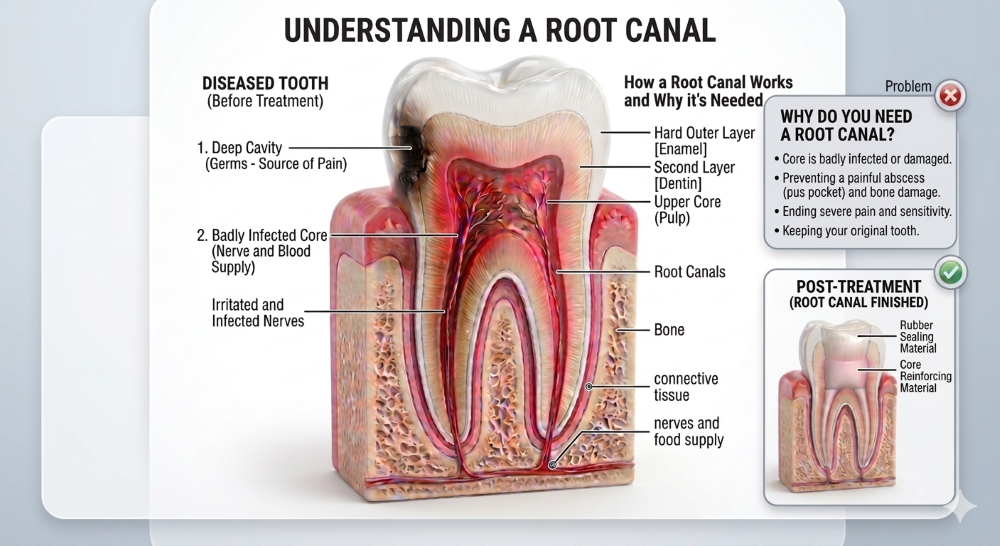
The pulp is the soft tissue inside the tooth that contains nerves, blood vessels, and connective tissue (supporting tissue). When this tissue becomes irritated, inflamed (swollen), or infected, it can cause pain and compromise the tooth’s health. Endodontic treatment focuses on addressing these deeper concerns while aiming to preserve the tooth itself.
The most common endodontic procedure is root canal treatment, but endodontics as a field is broader than that. It is centred on protecting the tooth from within.
Inside the Tooth: Why the Pulp Matters
To understand endodontics, it helps to understand the basic structure of a tooth.
- Enamel is the hard outer layer that protects the tooth
- Dentin lies underneath and supports the enamel
- Pulp is the innermost tissue, containing nerves and blood vessels
- Root canals are the small channels (narrow spaces) within the roots that contain pulp tissue
When decay, cracks, trauma, or infection reach the pulp, the tooth may become painful, sensitive, or vulnerable to further damage. Because this tissue is located deep inside the tooth, the problem often cannot be fixed with a surface-level treatment alone.
What Problems Endodontic Treatment Can Address
Endodontics is used to treat conditions affecting the inner health of the tooth. These may include:
- Deep decay that has reached the pulp
- Inflammation (swelling or irritation) of the pulp
- Infection inside the tooth
- Abscess formation (a pocket of infection) near the root
- Cracked or fractured teeth involving the pulp
- Dental trauma that affects the nerve or blood supply
- Teeth that remain painful after repeated dental treatments
These conditions vary in severity, but they all involve one common issue: the inner tissue of the tooth has been compromised and requires careful treatment.
Why Problems Develop Inside the Tooth
The inner part of the tooth can become inflamed (swollen or irritated) or infected for several reasons. Common causes include:
- Untreated tooth decay that progresses deeper into the tooth
- Cracks or fractures that allow bacteria to enter
- Dental trauma, even when no visible fracture is present
- Repeated treatment on the same tooth, which can sometimes irritate the pulp over time
- A bacterial infection that travels toward the root
Understanding the cause is important because it helps guide the most suitable treatment and determine whether the tooth can be predictably saved.
Saving the Natural Tooth: Why It Matters
One of the most important principles in dentistry is that, when appropriate, preserving the natural tooth is often the preferred option.
Preserving the natural tooth may help:
- Maintain normal chewing function
- Support bite alignment (how the teeth come together)
- Reduce stress on surrounding teeth
- Preserve the familiar feel of the natural teeth
- Avoid the need for extraction and replacement options
A natural tooth, when treatable and properly restored, can often continue to function successfully for many years. For this reason, endodontics plays an important role not just in pain relief, but in long-term oral health preservation.
What to Expect During Endodontic Treatment
While each case is different, endodontic treatment typically follows a planned set of steps.
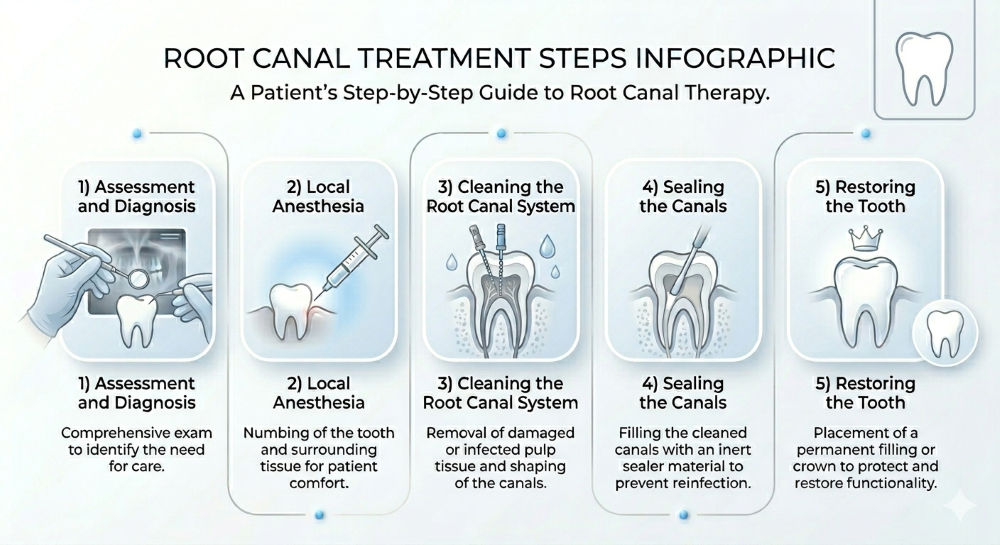
Assessment and Diagnosis
The first step is a detailed examination, which may include X-rays and clinical testing. This helps determine whether the pulp is inflamed, infected, or no longer healthy.
Local Anesthesia
The area is numbed so that treatment can be performed comfortably.
Cleaning the Root Canal System
The affected pulp tissue is removed, and the canals are cleaned and disinfected (germs are removed) carefully.
Sealing the Canals
Once the tooth has been cleaned internally, the canals are sealed to support long-term health and reduce the risk of reinfection (infection again).
Restoring the Tooth
After endodontic treatment, the tooth may receive a filling, buildup (added material to support the tooth), or crown, depending on how much remaining structure needs protection.
For many patients, understanding the process helps reduce anxiety and makes treatment feel much more manageable.
Is Root Canal Treatment Painful?
This is one of the most common concerns patients have.
The idea that root canal treatment is extremely painful is outdated. In reality, modern endodontic treatment is designed to be controlled, precise, and comfortable, with local anesthesia used to keep the area numb during the procedure.
In many cases, the treatment is performed because the tooth is already painful due to inflammation (swelling) or infection. Treating the source of the problem often brings relief rather than creating more discomfort.
Some mild soreness after treatment can occur, but this is usually temporary and manageable with the guidance provided by the dental team.
Recovery and Aftercare
After endodontic treatment, it is normal for the tooth and surrounding area to feel mildly tender for a short time. This often improves as the tissues settle.
Patients are usually advised to:
- Avoid chewing hard foods on the treated side immediately after treatment
- Follow any instructions provided for pain management or care
- Return for the final restoration if one is recommended
- Contact the clinic if swelling, severe pain, or unusual symptoms develop
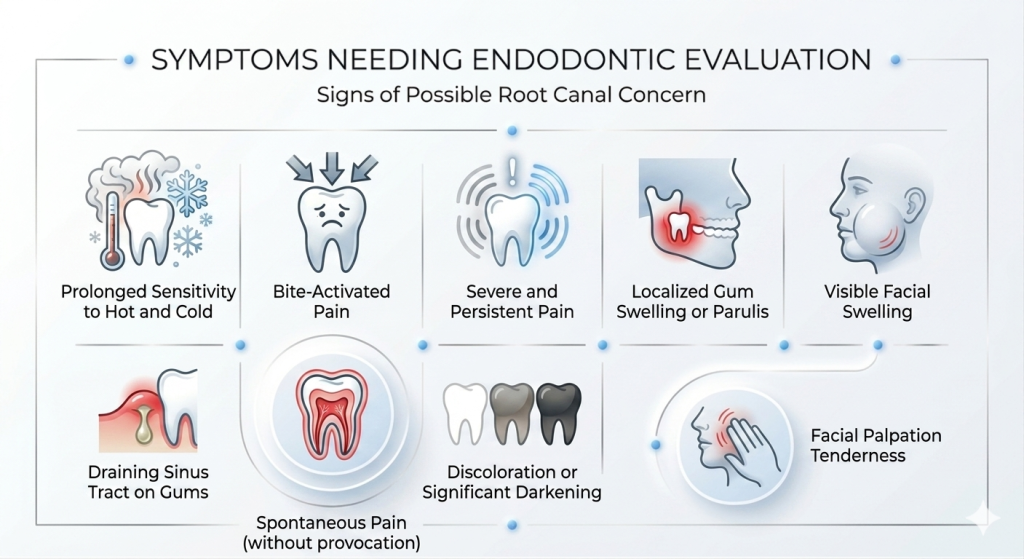
Completing the treatment properly, including the final restoration, is an important part of protecting the tooth long term.
Why a Crown May Be Recommended
Many patients wonder why a crown is sometimes needed after a root canal.
The reason is that some teeth — especially back teeth — may become more vulnerable to fracture after significant decay or after the internal tissue has been removed. A crown helps protect the remaining structure by covering and strengthening the tooth.
Not every root canal-treated tooth needs a crown, but in many cases, it provides important long-term support and reduces the risk of the tooth breaking later.
Why Timely Treatment Matters
Delaying endodontic treatment can allow the problem to become worse.
Without treatment:
- Infection may spread deeper or beyond the tooth
- Pain may worsen or become more frequent
- Swelling may develop
- The tooth may become more difficult to restore
- Extraction may become more likely
Early assessment does not always mean treatment is extensive. In many cases, identifying the problem sooner can make the process more straightforward and improve the chances of saving the tooth.
Endodontics vs Extraction
Patients sometimes wonder whether it is simpler to remove the tooth instead of treating it.
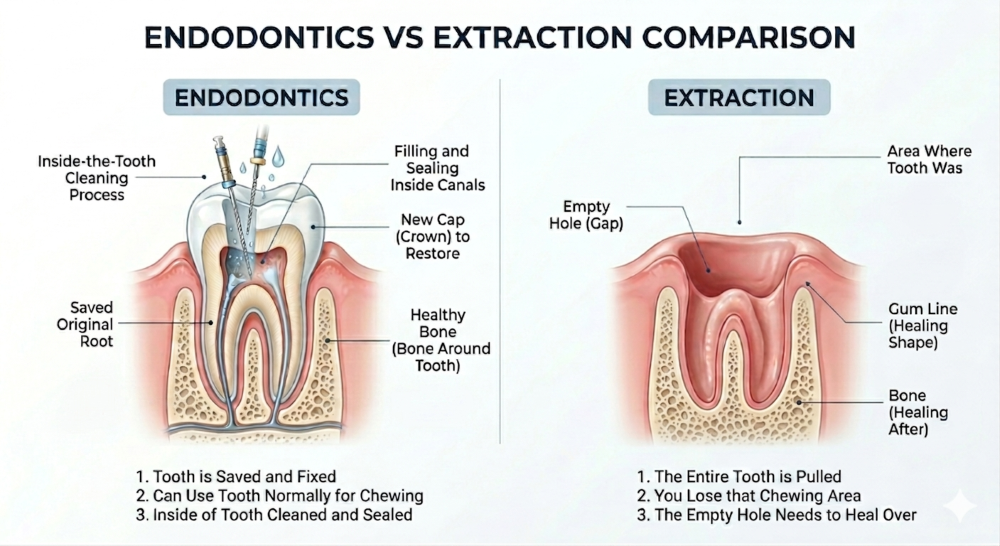
Extraction may be necessary in some cases, but when a tooth can be predictably saved, preserving it is often beneficial. Removing a tooth creates a new gap that may later need to be addressed with an implant, bridge, or other replacement option.
Endodontic treatment, when appropriate, allows the natural tooth to remain in place and continue functioning. This is why it is often considered before extraction when the tooth is restorable.
Myths and Facts About Endodontic Treatment
Myth: Root canals are extremely painful
Fact: Modern root canal treatment is designed to be comfortable and often helps relieve the pain caused by infection or inflammation (swelling).
Myth: Extraction is always better than saving the tooth
Fact: When possible, preserving (saving) the natural tooth is often preferred because it supports natural function and avoids the added decisions involved in tooth replacement.
Myth: If the pain disappears, the problem is gone
Fact: In some cases, the nerve may stop responding even though the infection is still present. A lack of pain does not always mean the tooth is healthy.
Myth: A root canal-treated tooth does not last long
Fact: With proper restoration (repair) and good oral care, a treated tooth can continue to function for many years.
Myth: Only painful teeth need endodontic treatment
Fact: Some teeth with significant pulp damage show only mild symptoms or are discovered through examination and X-rays.
The PHI Dental Care Approach
At PHI Dental Care, endodontic care is approached with the same principles that guide all of our treatment: careful diagnosis, clear communication, patient comfort, and long-term thinking.
We believe patients feel more confident when they understand what is happening and what their options are. That is why we take the time to explain the condition of the tooth, discuss the purpose of treatment, and help patients make informed decisions based on their oral health needs.
Whenever possible and appropriate, our focus is on preserving the natural tooth and restoring it in a way that supports comfort, function, and long-term stability.
A Final Thought on Tooth Preservation
Endodontics is often associated with root canals, but at its core, it is about something much more important: saving the tooth from within.
When the inside of a tooth becomes inflamed or infected, timely treatment can help relieve discomfort, remove infection, and preserve natural function. For many patients, this means keeping a tooth that might otherwise have been lost.
At PHI Dental Care, we believe informed patients make stronger decisions. Understanding endodontic treatment is the first step toward protecting not just one tooth, but the overall health and stability of your smile.